
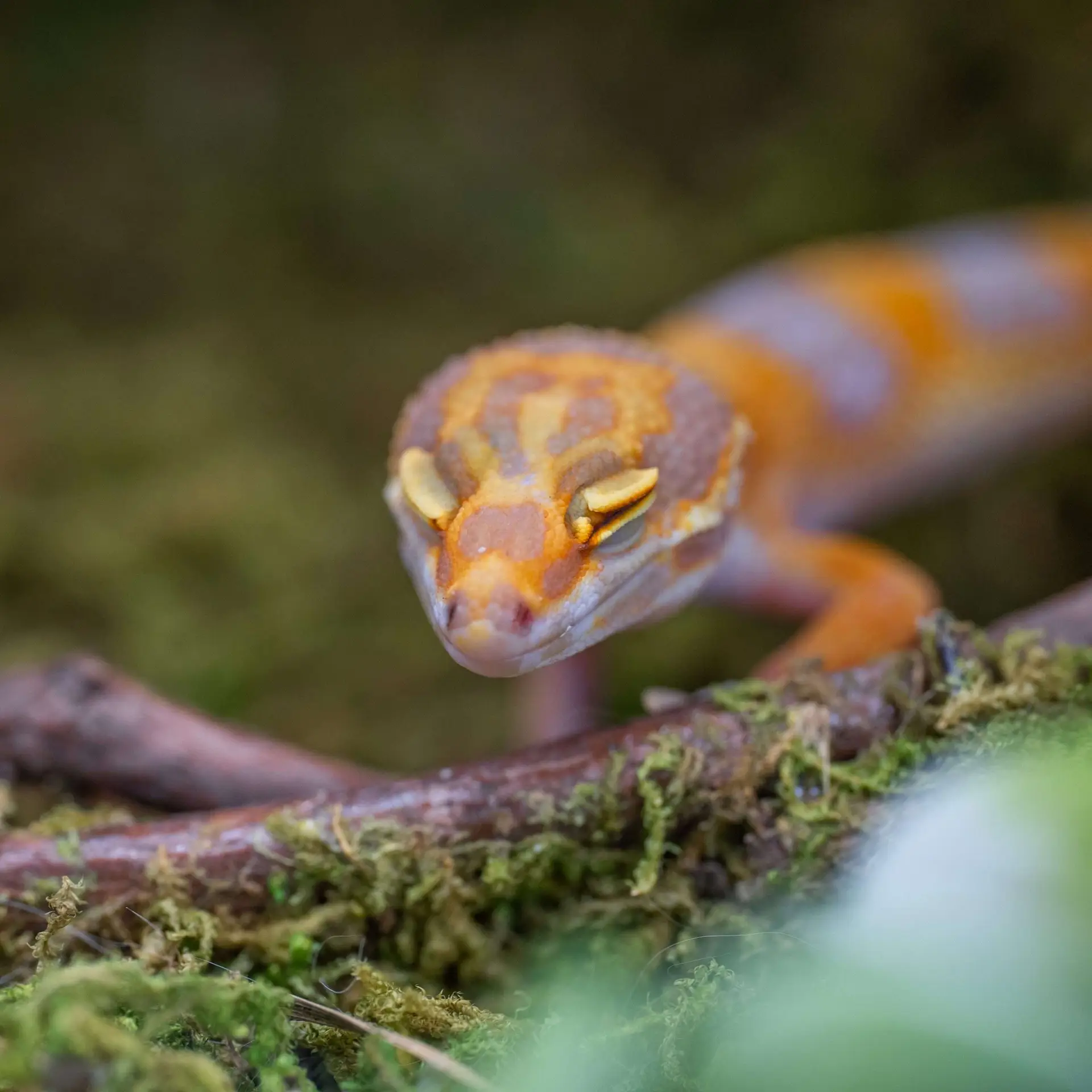
Welcome to the wonderful world of Leopard Geckos (Eublepharis macularius)! These hardy, docile, and character-filled reptiles are one of the most popular first-time pets. Our guide will walk you through setting up their perfect home and keeping them healthy and happy, the Gecko Fancy way!
Habitat Setup: Creating the Perfect Home
The Enclosure
- Juveniles
- For our juveniles, we like the Extra Tall Acrylic Shoe Boxes that you can purchase at most Walmarts! Leopard Geckos grow quickly compared to other species, so we don’t like to recommend spending a lot of money on a “fancy” tank, when we can make a suitable replacement work on a budget for the few months needed until an adult enclosure size is recommended! You can also work with a 10 gallon tank for in the meantime, if you prefer or already have one available!
- Adults
- A 20 gallon (30x12x12 inches) is highly recommended as a minimum for one adult gecko. If you plan to house two adults (females only, never two males!), a 31 gallon or 40 gallon is ideal! Here at Gecko Fancy, we personally recommend the 31 Gallon tanks available from Thrive at Petsmart that we have linked in this section, they’re a great all-around winner for size, quality, and price!
Substrate (Flooring)
The substrate choice is crucial for your gecko’s health.
| Safe Substrates (Recommended) | Substrates to AVOID |
| Paper Towels: Easy to clean, great for juveniles/quarantine. | Calci-Sand/Vitamin Sands: Often ingested, causing impaction. |
| Slate Tile/Non-Adhesive Shelf Liner: Easy to disinfect, holds heat well. | Loose Sand (Play Sand, etc.): High impaction risk. |
| Scott’s Top Soil/Play Sand Combo: This is what we personally use! A 70% Top Soil, 30% Play Sand mix is what we find our geckos love the best! | Reptile Carpet: Requires frequent, thorough washing, holds a significant amount of bacteria. |
Hides
A leopard gecko requires a minimum of two hides to feel secure and regulate its body temperature and moisture.
- Warm Hide: Placed on the warm side of the tank
- Cool Hide: Placed on the cooler side of the tank.
- Moist Hide (Humid Hide): Essential for healthy shedding! Some people combine the cool hide and moist hide into one, but others prefer a separate one on its own! For our juveniles, a plastic container with a hole cut in the side, filled with moist moss or paper towels works wonders. For our adults, we love hides with additional texture like buddha nut hides or coco shells!
Diet & Nutrition
Leopard Geckos are insectivores and should never be fed fruits or vegetables, or something like a Crested Gecko/Frugivore Deit. Their main diet consists of live insects. We feed our geckos three times per week!
Staple Feeders
- Mealworms: Easy to store and digest.
- Dubia Roaches: Excellent nutritional value, and easy to breed yourself. Plus, they carry significantly fewer parasites or diseases than crickets!
- Lugarti Insectivore Diet: Once per week, we offer this to all of our insectivores! This diet bridges any nutritional gaps that might be left behind, and ensures a healthy way to consume extra calcium and proteins!
Treat Feeders
- Waxworms: High in fat, only feed as an occasional treat.
- Hornworms: High in moisture, great for hydration, but also a treat due to size and overall nutritional breakdown.
- Superworms (Zophobas): High in fat, only for adult geckos, and can potentially injure the gecko if left in their tank for extended periods of time.
Water
Always provide a shallow, clean dish of fresh water. While you do not have to use dechlorinated or spring water, we do specify that you should only ever use clean water. Please do not use outside/unfiltered water like from a puddle or pond!
Shedding & Health
Shedding (Ecdysis)
Leopard Geckos shed their skin as they grow. It’s more frequent for babies to shed than adults, but adults will still shed throughout their lifetime! You’ll know if a gecko is about to shed because their skin will appear dull, grey, white, and/or begin to lift around their joints. Make sure at least one of their hides is wet or very humid to make sure they are able to shed their skin! Geckos, including Leopard Geckos, typically eat their shedded skin to get more calcium back into their bodies, so it’s very possible your gecko may also shed without you knowing! If the skin doesn’t come off fully, especially around the toes or eyes, it can constrict circulation. A warm, shallow soak can help loosen stuck skin, which you can then gently remove with a moist cotton swab. Want to make it a little bit easier? We recommend keeping a Shed Spray on hand, like the Lugarti Shedding Spray!
Common Health Issues
- Impaction: Caused by ingesting loose substrate.
- Symptoms: Lethargy, refusal to eat, swollen abdomen.
- Metabolic Bone Disease (MBD): Caused by a lack of D3 and calcium.
- Symptoms: Wobbly walk, rubbery jaw, kinked tail or spine. This is a severe, life-threatening condition requiring vet attention.
- Parasites: Can lead to rapid weight loss and diarrhea. A vet can diagnose and treat these.